
Reflecting on this title I wonder if it’s just me or if it’s a broader, wider issue where we often focus on the DESCENT of the journey, and not how challenging the ASCENT can be.
In stark contrast, when we think of myths of the descent into the underworld – Inanna, Persephone, etc. – we focus on the journey down and the sacrifices made on the way to the destination. Yet when I think walking down hill, or travelling down, I often think of it as the easier of the two.
For example, walking downhill on the way to school was always the easier route than walking up hill on the way home. We often need to be more careful driving downhill, particularly on windy roads in the wet, than we do driving uphill. My knees particularly prefer going down the stairs than going up.
When we look at the mythos, is it because it’s in the title?
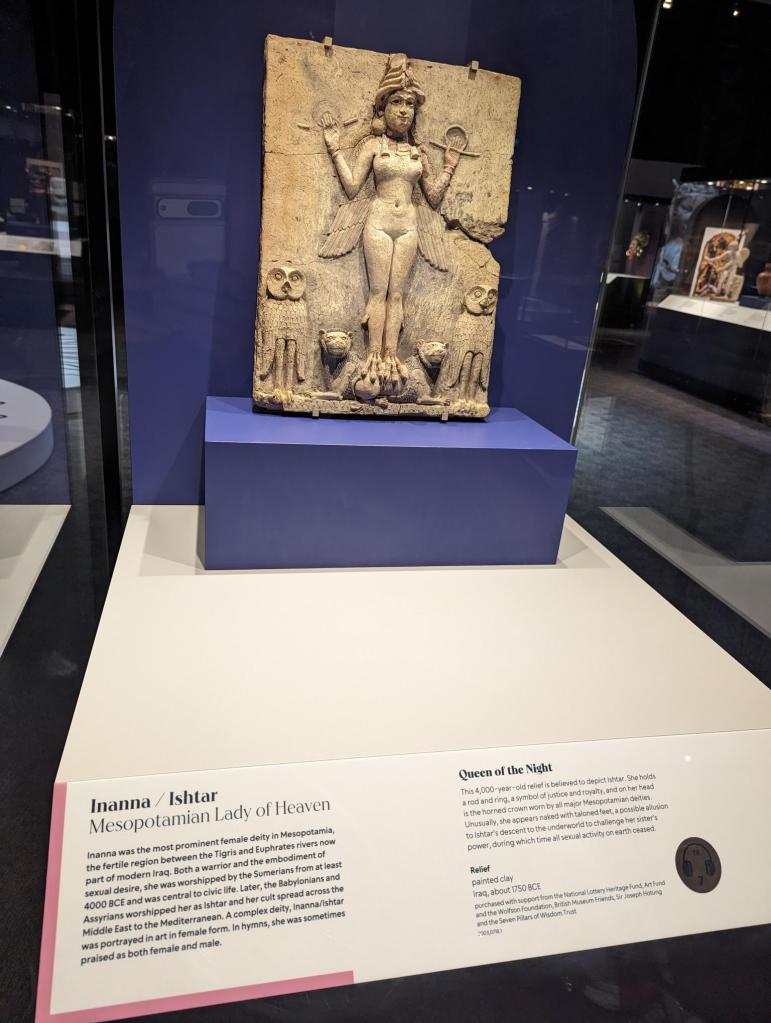
In this post I’m going to focus on the Descent of Inanna because of my personal ties to this particular mythos.
Inanna is someone who has been quietly calling to me over the years, and now that I’m post-ovaries I am hearing her call a lot clearer. Outside of songs and chants, the first time I came to work with her was with my old Coven in Sydney when we underwent the ‘Descent of Inanna’ journeywork.
Within Sumerian mythology, Inanna travels into the Underworld to visit her sister, Ereshkigal. Inanna in Sumeria/Mesopotamia is the Goddess and Queen of Heaven, while her sister Ereshkigal is the Goddess and Queen of the Dead. Inanna decides to visit the Underworld to witness the funeral rites of Ereshkigal’s husband.
Inanna dresses in finery, her “mee” – her crown, jewellery, her breastplate, her sceptre. As a Queen, she chooses to dress as such. Prior to entering, she gives instruction to her maid, Ninshubur, on what to do if she fails to return after three days.
She heads down and knocks on the gates of the Underworld, declaring who she is and why she is there. When Ereshkigal learns that Inanna is at the gates, she’s not happy. She instructs for the seven gates of the underworld to be bolted shut against Inanna.
If Inanna wants to come down, she must face the gates one at a time, and she must remove one of her royal garments at each gate.
Once she arrives at Ereshkigal’s throne, she is naked. Inanna doesn’t get the opportunity to speak before she is judged by the seven judges of the Underworld and declared guilty. Ereshkigal turns her sister into a corpse and hangs her on a hook on the wall.
(Why? Because Inanna got pissed at Gilgamesh for refusing to be her consort, insists that her father give her Gugalanna, Ereshkigal’s husband. He then gets killed…by Gilgamesh. Ereshkigal has every right to be pissed off at her sister and be declared ‘guilty’ by the Judges of the Underworld.)
Ninshubur comes to her aid, she is reborn and returns to the above world.
This is an absolute bastardisation of her story, and I recommend you go here as this article is so much more in depth.
The Mythos of Descent of Inanna (Wolkstein-Kramer)
The article also goes into how I’ve come to understand the story – the Jungian concept of having to discard elements of yourself to then die and be reborn.
At each of the seven gates, Inanna had to discard an element of her finery before she was able to pass, leaving her naked and indignant. Each item was a ‘mee’ or an item that represents her power. When we feel called to enact our own version of the Descent, we too will in time find ourselves handing over several items that we hold dear.
The Ascent
I spoke earlier about the importance of the ascent as well, because in researching I found so many blogs and articles where the main focus has been on the DESCENT – the stripping of oneself, the removal, the arduous journey of each gate being only just open and having an element of herself removed at every passing.
For Inanna’s ascent, her maid Ninshubur went to three separate Gods for help, and Enki is the one who helps. He creates beings to assist, gifting them gifts of food and water to pass onto Inanna and allow her to be reborn.
The motions of Inanna’s rebirth comes not from herself as a singular but focuses on the community to help bring her back to life. I think that is such an important message that can often be overlooked when we are focusing solely on the descent.
Yes – the descent is a singular and solitary journey, and only one we can do by ourselves. But the rebuilding after death is where we need that support of family and friends, of our community, of our network to help us maintain the newness that we are now striving for and wanting to maintain.
Without Ninshubur, without Enki, and the assistance of two new creatures and her beautician, Inanna would have been left as a corpse, rotting on a hook.
From Ereshkigal’s perspective, I probably would’ve done the same. She was so deeply in love with her husband, and for him to not only be taken from her but also put to death, and then have the instigator arrive at the funeral, I wouldn’t be overly pleased.
Personal Descent and Ascent
This is a journey you can do with a Coven, provided you understand the mythology and understand each of the roles your Coven members will need to play out. You will need to have several items to be sacrificed at each of the gates with full understanding that they will never be coming back.
Do you not need to be naked at the end if you do not want to be. It might be the dead of winter and you do need to be sensible in these matters.
For a solely personal descent, you may find that it takes place over a number of days, in different places, and at each metaphorical ‘gate’ you give something that is important to you.
From personal experience, I don’t believe this can be planned. Those who do get to plan death, whether it is in the literal sense or completely metaphorical, are few and far between. Sometimes you don’t know the time is right for your spiritual death and rebirth. You may be aware that it is coming, and have a general idea of what to do.
A Planned Descent
If you do plan it out because you’re at a crossroads in life and you need to just end the book (so to speak), choose your seven items. These should have significance to you, or the places you’re giving them AWAY should be of significance to you.
I do suggest doing this out-and-about because the energy of the “death” can be better rebirthed by the natural elements. You may not want this energy hiding in the corners of your home.
Hold a rite for each item in each place if you can. It can be as simple or elaborate as you wish. You may want to utilise a travelling altar; or you may just rock up and say some words. What matters here ultimately is your INTENTION of what you are letting go of – what you are ‘sacrificing’ and releasing from yourself.
This is stronger than a chord cutting, however, cutting the chords can also work well here in case there is anything choosing to linger.
Choose to give a physical representation at each of the gates. This can be jewellery, or a crystal, or it could be the idea, or the intention written on paper. Bury the item. Give the item over to the Earth Mother to cleanse.
At this Gate I give [item] that represents [what it represents]. [Say something about it – why is it important that you give it away, or why does it no longer serve you].
I bury this item, and I request to the Great Earth Mother to cleanse it, so whoever is meant to find it next can find it with a clear heart and be free of any attachments of its previous life. May the right person find this as they need to, if they are supposed to.
The Unplanned Descent
I knew something big was coming, but I didn’t plan it out well enough.
One night I was given my orders – pack some bags, do your important morning task at work, then head south-and-west. That was it.
NOW! NOW! NOW! NOW! NOW!
Do not tell anyone, do not collect $200, do not pass GO.
My first gate was a town over 3 hours drive away. I had never been to this town as an adult, but the place was important because of what was needing to be let go of. My item was given to the bees.
My second gate was another 3 hour drive from the first, and a place represented by my childhood. My item was buried in the sand of a place of importance.
My third gate was my spiritual home for the early days of my practice. My item was offered to the wild white horses, claimed by the sprites as the heavens opened and I became a drowned rat.
(Gates four and five were in my home down, six hours drive from where I live now. Gates six and seven were half an hour north, slightly closer to home.)
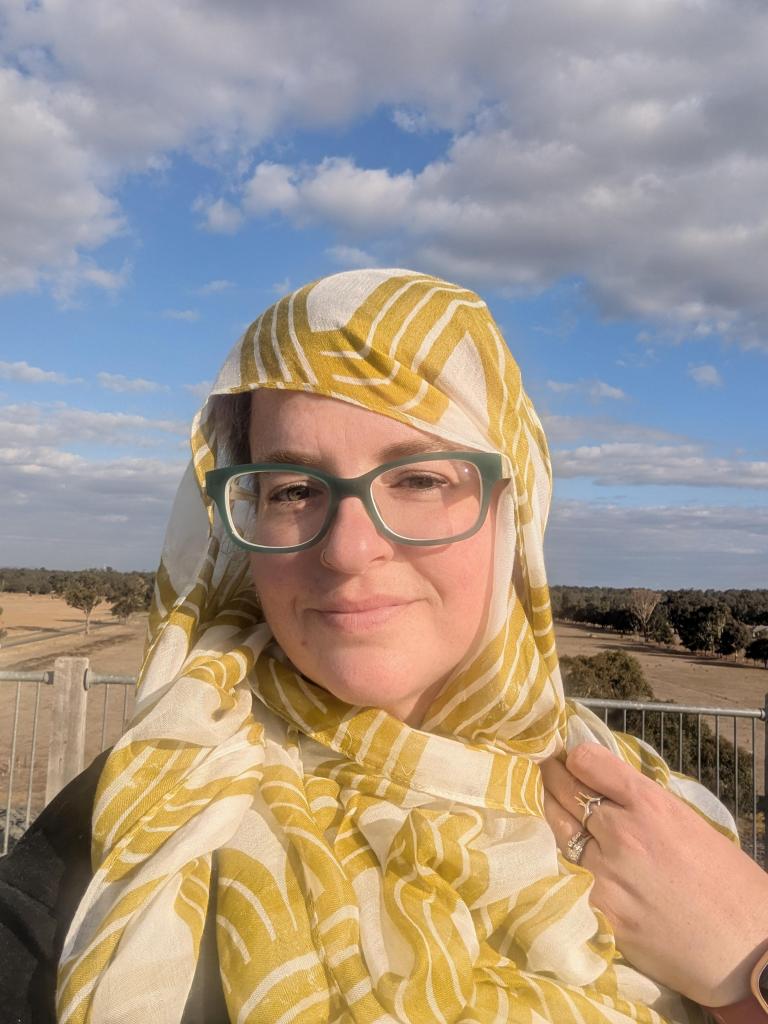
My fourth gate was at the hairdressers, and my item was my hair. For these rites I had covered my hair for the first time, and I have never felt stronger.
My fifth gate was the bones of an Ancestor who has recently approached me. She wouldn’t let me find her until I had had lunch. I appreciate that.
My sixth gate was the bones of my Ancestors of Inspiration. In this particular spot is six ancestors together, and it reminded me of Fridays at the Village. My father confirmed my gift was accepted that night when two of the six came through. I did not expect that.
My seventh gate was where it all began. I closed the gate that my prior self first opened over twenty years ago. I was given a gift as I approached, and I laid down my final item.
Much like Inanna needing to be found after three days, my descent rituals took place over three days. I was home by the third night.
Since this descent, my Ascent as become a slower journey, and I am missing that community element that I know I need. I need multiple people, and mentors of my own, teachers and friends to help me understand this new birth: I am 40 and post-menopausal, and I know there are some amazing things coming my way. This journey hopefully has helped allowed the space for me to allow these good things to come in.
Finally, a conclusion
When we undertake our own Descent, it is gripping. It is powerful, and it can be dramatic and it will make you question everything. However, the Ascent is just as essential even if it is glorified. Through eating the life-giving food and water, we rise and we integrate what we have learned along the way. We can build ourselves in the image that we want ourselves to be, not what has been declared upon us.
My own recent journey has reminded me that the slow crawl back to the surface – something I would do each month with PMDD to some degree – requires its own kind of courage. The importance of asking for help, being patient and kind to ourselves while showing so much vulnerability is commendable to each one of us who is on this temperamental rollercoaster, no matter how often the dips and rises are.
If you find yourself on this journey and enacting the Descent of Inanna, or if you are one who battles the descent of a different manner cyclically, know this: your return matters. Your rising matters. And although the descent is most often a solo expedition, you are allowed to – and are meant to – rise with others.




 Book of Eucalypt
Leave a comment